Dimmer switches sound simple. Turn a dial or flick a slider and the light gets brighter or dimmer, right? In practice, there's a bit more to it, especially since most of us switched to LED bulbs. Fit the wrong dimmer with the wrong bulb and you'll get flickering, buzzing, or a light that won't dim below about 80 per cent. None of that means dimmers are difficult, it just means it helps to know what you're buying before you buy it.
This guide covers the main types of dimmer switch, how to make sure yours will actually work with your bulbs, and what to check before installing or replacing one.
How does a dimmer switch actually work?
A dimmer doesn't lower the brightness by simply reducing the voltage, that would waste a lot of energy as heat. Instead, modern dimmers use something called phase cutting. Mains electricity in the UK runs as an alternating current, switching direction 50 times a second. A phase cutting dimmer rapidly switches the power on and off within each of those cycles, cutting out a portion of the wave. Cut out more of the wave and the light gets dimmer, cut out less and it gets brighter.
There are two ways to do this cutting, and this is where "leading edge" and "trailing edge" come in.
Leading edge vs trailing edge dimmers
Leading edge dimmers cut the start of each cycle. They're the older, more traditional design, built around a component called a TRIAC, and they were originally designed for incandescent and halogen bulbs, along with old style wire wound transformers. They're generally the cheaper option and are still widely available.
- Best suited to: incandescent, halogen, magnetic transformers
- Typical cost: lower
- Dimming feel: can be less smooth with LEDs
- Common issue if mismatched: buzzing or flickering with LED bulbs
Trailing edge dimmers cut the end of each cycle instead. They're a newer, more sophisticated design, generally built with MOSFET or IGBT components, and tend to give smoother dimming with less buzzing. They usually work well with LED bulbs and electronic transformers.
- Best suited to: dimmable LED, electronic transformers
- Typical cost: higher
- Dimming feel: generally smoother, quieter
- Common issue if mismatched: rarely an issue, but check compatibility lists
If you're not sure which type you currently have, and you're planning to switch to LED, it's worth checking rather than guessing. Many modern dimmers, including several in our dimmer switches range, are designed to handle both leading edge and trailing edge loads, which takes the guesswork out of it.
Will my dimmer work with LED bulbs?
Not automatically, and this is the single biggest cause of dimmer problems. Two issues tend to come up:
Not all LED bulbs are dimmable. Standard, non-dimmable LEDs will not dim smoothly, and using one on a dimmer circuit can damage the bulb or the dimmer over time. Always check the packaging for a "dimmable" label before fitting a bulb to a dimmed circuit.
Dimmers have a minimum load as well as a maximum one. LED bulbs draw far less power than the incandescent bulbs dimmers were originally designed for, so a dimmer rated for a chunky 400W of incandescent lighting might only be rated for a fraction of that in LED wattage. If the total wattage of your LED bulbs falls below the dimmer's minimum threshold, you may get flickering or a light that won't turn on properly at low settings. The fix is usually straightforward: check the dimmer's rated LED wattage range on the packaging or spec sheet, and make sure your total bulb wattage sits comfortably within it.
If you're upgrading a room to LED and keeping an existing dimmer, it's worth checking the compatibility information for both the bulb and the dimmer before you buy, rather than after.
Smart dimmers: what to know before you buy
Smart dimmers add scheduling, app control, and voice assistant compatibility (Alexa, Google Home and similar) on top of standard dimming. A couple of practical points worth knowing beforehand:
- Many smart dimmers need a neutral wire at the switch, which some older properties don't have. Some manufacturers now offer no neutral designs specifically to get around this, so it's worth checking the specification if you're working with older wiring.
- Multi way dimming (controlling one light from two or more switches) usually needs dimmers designed to work together as a set, rather than mixing and matching brands. Check the manufacturer's compatible accessories before planning a two way or three way setup.
Browse our smart switches and sockets range if app and voice control is what you're after.
Choosing the right dimmer: a quick checklist
- Bulb type: confirm your bulbs are labelled dimmable, and check whether they're better suited to leading edge or trailing edge control.
- Total wattage: add up the wattage of every bulb on the circuit and check it falls within the dimmer's rated range, top and bottom.
- Wiring: check whether you have a neutral wire at the switch, particularly important for smart dimmers.
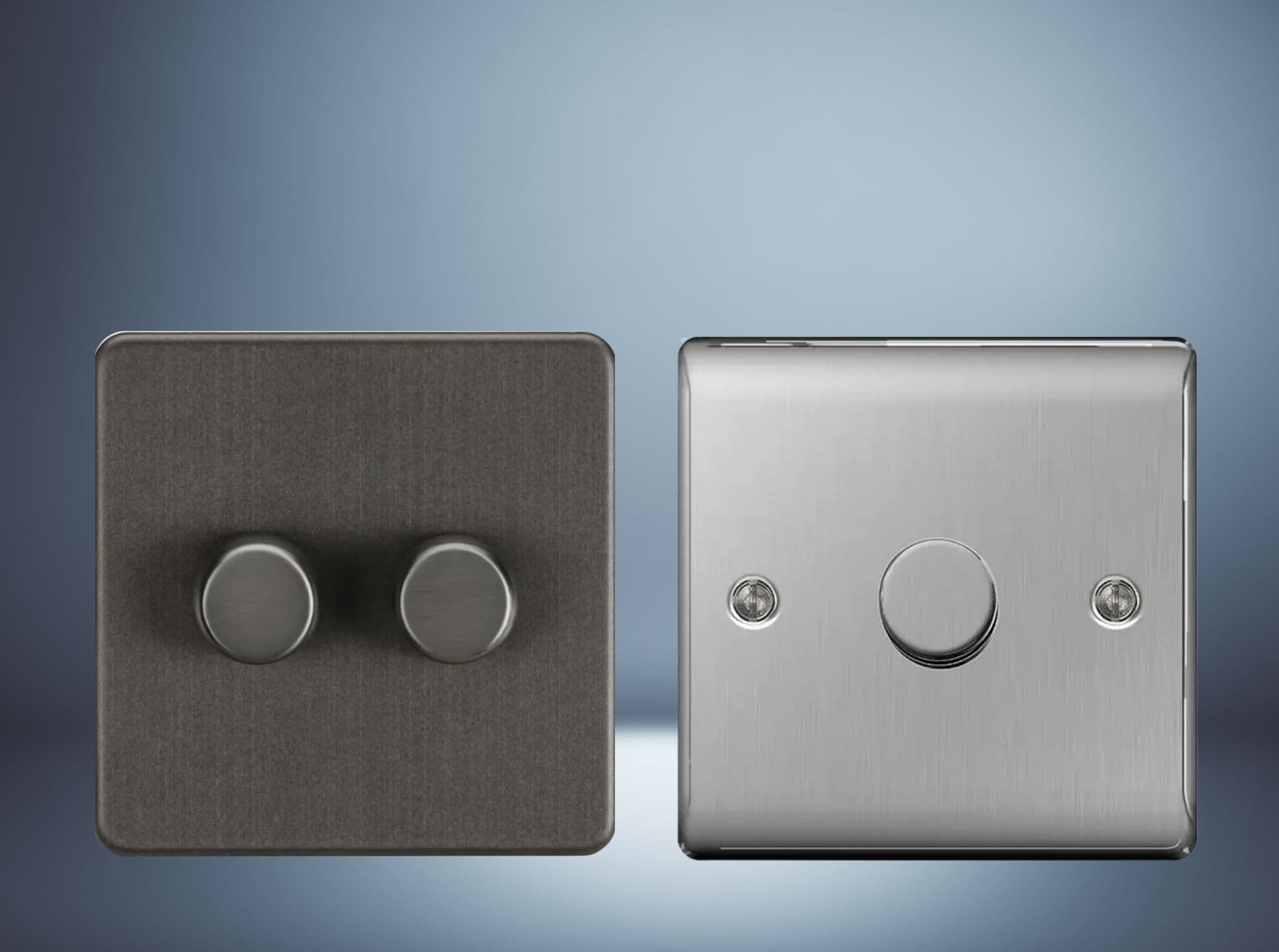
- Style and finish: dimmers are available in rotary, slide, touch and smart formats, and in finishes to match most existing sockets and switches, including our decorative switches and sockets collection.
- Gang size: single dimmers control one circuit, while 2, 3 and 4 gang versions let you control multiple lighting circuits from one plate, handy for open plan spaces or large kitchens.
Installing or replacing a dimmer switch
Swapping a like for like light switch for a dimmer on an existing circuit is generally considered straightforward electrical work, but it still needs to be done safely and correctly:
- Isolate the circuit at the consumer unit before removing the old switch, and check it's dead using a proper voltage tester.
- Check the type and number of wires in the back box match what the new dimmer needs, dimmers sometimes require slightly more room than a standard switch.
- Note down or photograph the existing wiring before disconnecting anything.
- Connect the new dimmer according to the manufacturer's wiring diagram, not a generic guide, as terminal layouts vary between brands.
- Restore the power and test at a few different brightness levels, not just fully on and off, to check for flickering.
If you're at all unsure, or the circuit involves anything beyond a simple swap, it's worth getting a qualified electrician to handle it. Electrical work in the UK also falls under Part P of the Building Regulations, and while straightforward like for like replacements are generally non-notifiable, anything involving new wiring or circuit alterations may need to be checked against current rules.
FAQs
Can I use any dimmer with any LED bulb? No. Check that the bulb is labelled dimmable, and that its wattage fits within the dimmer's rated range. Mismatches are the most common cause of flickering and buzzing.
Why does my dimmer buzz when the lights are low? This is usually caused by a leading edge dimmer being used with LED bulbs it wasn't designed for. Switching to a trailing edge or universal dimmer generally resolves it.
Do I need an electrician to fit a dimmer switch? A simple like for like replacement is something many confident DIYers manage safely, provided the power is isolated first. If you're changing the wiring, adding multi way control, or working with an older or unfamiliar circuit, it's best left to a qualified electrician.
What's the difference between a dimmer and a smart dimmer? A standard dimmer is controlled manually at the switch. A smart dimmer adds app, voice assistant or scheduled control on top, though it may need a neutral wire and specific compatible accessories for multi way setups.
Buy now at Alert Electrical
Getting the right dimmer isn't complicated once you know what to check: bulb type, wattage range, and wiring. Get those three right and you'll get smooth, flicker free dimming rather than a switch that buzzes or won't dim properly.
Take a look at our full dimmer switches range for options to suit LED, smart home and multi way setups, or explore our sockets and switches collection to match your dimmer to the rest of your room.