When the temperature drops, windows stay shut, washing dries indoors and showers run a little longer. The moisture has nowhere to go, so it settles on cold surfaces as condensation. Left alone, it leads to damp patches, peeling paint and mould. Good ventilation is the most practical fix, and for most homes an extractor fan is the best place to start.
This guide explains why condensation gets worse in winter, where extractor fans help most, and how to choose and fit the right one.
Why condensation gets worse in winter
Warm air holds more moisture than cold air. When warm, moist air meets a cold surface such as a window, an external wall or a bathroom mirror, it cools quickly and can no longer hold all of that moisture. The excess turns into water droplets.
In winter, indoor surfaces are colder and we open windows less often, so moisture lingers. Everyday activities add to it:
- Showering and bathing
- Cooking, especially with pans uncovered
- Drying laundry indoors
- Simply breathing, particularly in a busy household
The result is a steady build up of moisture that ventilation needs to remove.
Where an extractor fan makes the biggest difference
The most effective way to control moisture is to remove it where it is produced, before it spreads through the rest of the property. That makes three rooms the priority.
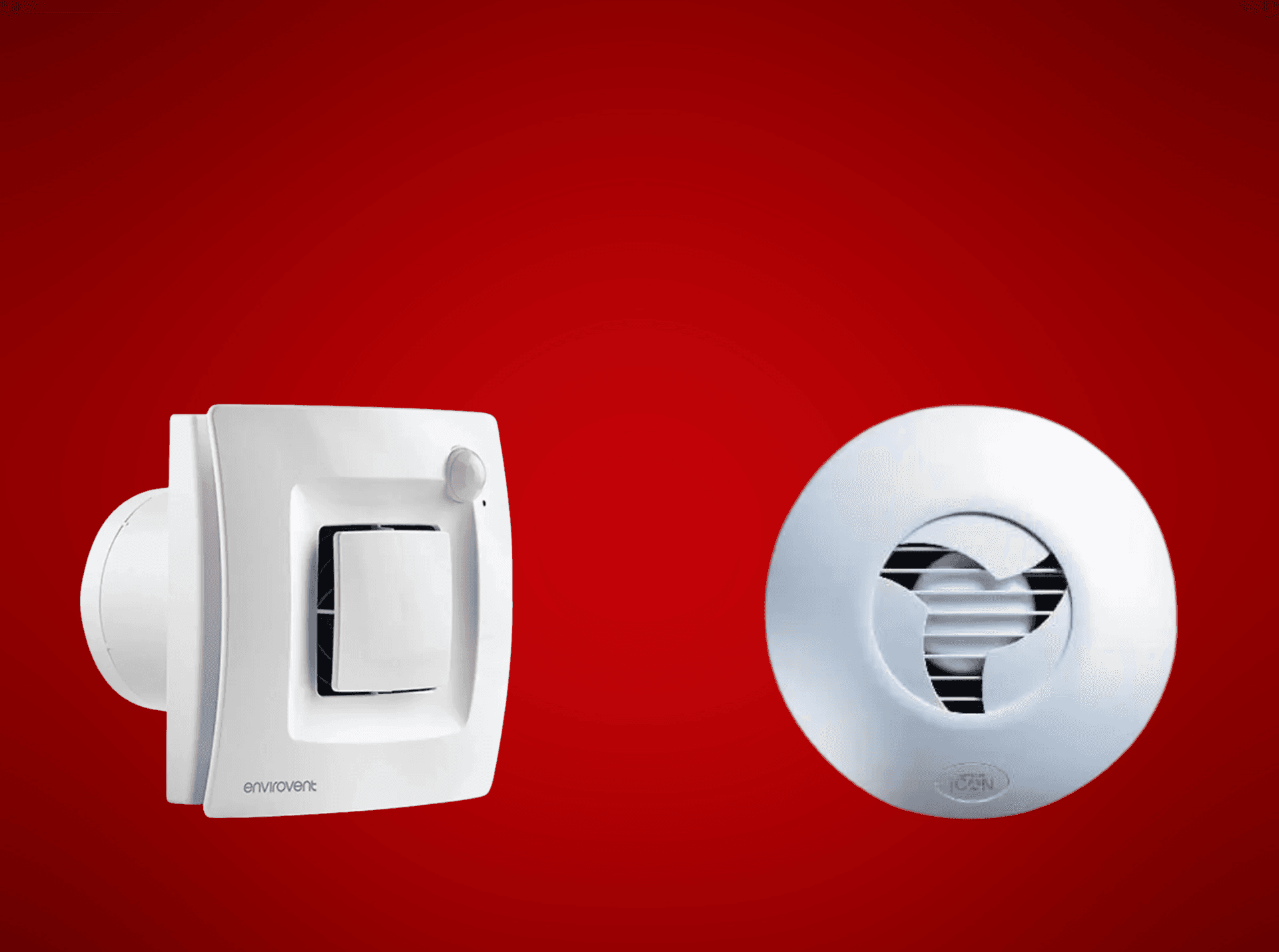
Bathrooms and shower rooms. A showering household produces a large burst of steam in a small space. A bathroom extractor fan vents that moist air outside, which helps protect walls, ceilings and fixtures from condensation and mould.
Kitchens. Cooking releases steam and cooking odours. Kitchen fans tend to be larger than bathroom models, and you can browse extractor fans for kitchens and bathrooms in both 4 inch and 6 inch sizes.
Utility rooms. Tumble dryers, washing machines and laundry drying all add moisture, so a utility room benefits from its own extraction.
Choosing the right type of extractor fan
The best fan depends on the room, the layout and how much ducting is needed.
Axial fans are the most common type. They are usually fitted to an external wall, window or ceiling, and suit rooms where the route to the outside is short.
Inline fans sit in the loft or ceiling void, with ducting carrying moist air to the outside. Because the motor is away from the room, they are typically quieter in use, which makes them a popular choice for larger bathrooms. Take a look at our range of inline extractor fans.
Size. Standard extractor fans come in 100mm (4 inch) and 150mm (6 inch) sizes. A 100mm fan is usually enough for a typical bathroom, while kitchens more often need 150mm.
Features worth considering:
- Timer: keeps the fan running after you leave the room, so lingering moisture is cleared.
- Humidistat: switches the fan on automatically when humidity rises, which helps if you tend to forget.
- Quiet running: a fan that is not irritating to use is a fan that actually gets switched on.
- Pull cord or wall switch: simple, familiar controls for rooms that do not need automation.
Brands such as Airflow, Manrose and Xpelair all offer models with a range of these features.
Airflow rates and the Building Regulations
In England, Approved Document F of the Building Regulations sets minimum extract rates for intermittent extraction in new work, such as new dwellings, extensions and replacement ventilation. The figures are measured in litres per second (l/s):
- Bathroom: 15 l/s
- Kitchen: 30 l/s if the fan is next to the hob, or 60 l/s elsewhere in the kitchen
- Utility room: 30 l/s
- Toilet: 6 l/s
Scotland, Wales and Northern Ireland have their own requirements. Whichever fan you choose, check its rated airflow against the room it will serve, and ask a qualified electrician if you are unsure.
Installation tips that make a real difference
Even a good fan will underperform if it is poorly installed. A few points to keep in mind:
- Vent to the outside. Never discharge moist air into a loft or ceiling void, where it will simply condense somewhere else.
- Insulate ducting in cold spaces. Ducting that passes through a cold loft can allow moisture to condense inside the duct and run back towards the fan.
- Position the fan sensibly. Place it close to the source of moisture, and away from the door so air is drawn across the whole room.
- Check the IP rating. Fans in bathrooms and shower rooms need a suitable Ingress Protection rating for their location.
- Use a competent electrician. Fitting a new fan involves wiring, ducting and often cutting through walls or ceilings, so it is best left to a qualified professional.
Finish the job neatly with matching extractor fan covers and accessories, which come in a range of neutral colours.
Simple habits that help your fan work harder
An extractor fan works best alongside good everyday habits:
- Close the bathroom door while showering so steam is drawn out rather than into the rest of the house.
- Put lids on pans when cooking.
- Dry laundry in a ventilated room, ideally with a fan running or a window slightly open.
- Wipe condensation from windows and sills in the morning.
- Leave a small gap between furniture and external walls so air can circulate.
Frequently asked questions
Should I leave my extractor fan running all the time?
Most extractor fans are designed for intermittent use, running while the room is in use and for a while afterwards. A fan with a timer or humidistat handles this for you. Only run a fan continuously if the model is designed for it.
How long should an extractor fan run after a shower?
A run on of at least 15 minutes is the usual minimum for a bathroom fan, and many installers suggest 15 to 20 minutes. A timer makes this effortless.
Is a 100mm or 150mm extractor fan better?
Neither is better in every case. A 100mm fan suits most domestic bathrooms, while a 150mm fan is more common in kitchens where more air needs to be moved. Always check the airflow rating against the room.
Will an extractor fan stop mould completely?
No. An extractor fan reduces excess moisture, which is a major cause of mould, but it will not remove mould that has already formed. Persistent damp can also come from leaks or other building faults, so if the problem continues, have it investigated.
Can I fit an extractor fan myself?
Replacing an existing fan with a similar model may be straightforward for some, but new installations involve electrical work, ducting and structural changes. A qualified electrician is the safest choice.
Beat winter condensation with the right ventilation
Winter does not have to mean streaming windows and creeping mould. Removing moisture at source with a well chosen extractor fan protects your property and keeps rooms fresher and more comfortable.
Browse the full fans and ventilation range at Alert Electrical to find the right extractor fan for your home or project.