If you've recently searched "how many smoke alarms do I need" or "where should smoke alarms be fitted in a UK home", you're not alone. Since changes to fire safety regulations across England, Scotland and Wales, thousands of homeowners and landlords are checking whether their property meets current standards — and whether their existing alarms are up to scratch.
Getting this right isn't just about ticking a legal box. Working smoke alarms in the right locations dramatically increase the time you have to escape in a fire. In this guide, we'll break down exactly how many alarms you need, where to fit them, which type suits each room, and how to choose reliable, compliant equipment.
Do You Legally Need Smoke Alarms in Your Home?
Yes — and the rules have tightened in recent years.
England: Since October 2022, all rented properties (not just HMOs) must have a working smoke alarm on every storey used as living accommodation, and a carbon monoxide alarm in any room containing a fixed combustion appliance (such as a wood burner or gas boiler with a flue — gas cookers are exempt from this requirement). Landlords must check alarms are working at the start of every new tenancy.
Scotland: Scotland has the strictest rules in the UK. Since February 2022, every home — owned or rented — must have:
- One smoke alarm in the room most frequently used for general daytime living (usually the lounge)
- One smoke alarm in every circulation space, such as hallways and landings
- One heat alarm in the kitchen
- All alarms interlinked, so if one sounds, they all sound
- A carbon monoxide alarm wherever there's a fuel-burning appliance or flue
Wales: Wales has gone further than England under the Renting Homes (Fitness for Human Habitation) (Wales) Regulations 2022. Smoke alarms in rented properties must be mains-wired and interlinked, either via a wired or wireless system. A carbon monoxide alarm is also required in any room with a fuel-burning appliance — including gas cookers, which are exempt from this rule in England.
Even if you're an owner-occupier with no legal obligation, building regulations (Approved Document B) recommend the same standards for new builds and major renovations — and insurers increasingly expect compliant alarm coverage as a minimum.
How Many Smoke Alarms Do You Actually Need?
As a practical minimum for most UK homes:
- One smoke alarm per floor — fitted in the hallway or landing, which acts as the main escape route
- A heat alarm in the kitchen — ordinary smoke alarms are prone to false alarms from cooking, so a heat alarm is the correct choice here
- A smoke alarm in the main living room — particularly important if you have an open-plan layout or a wood burner
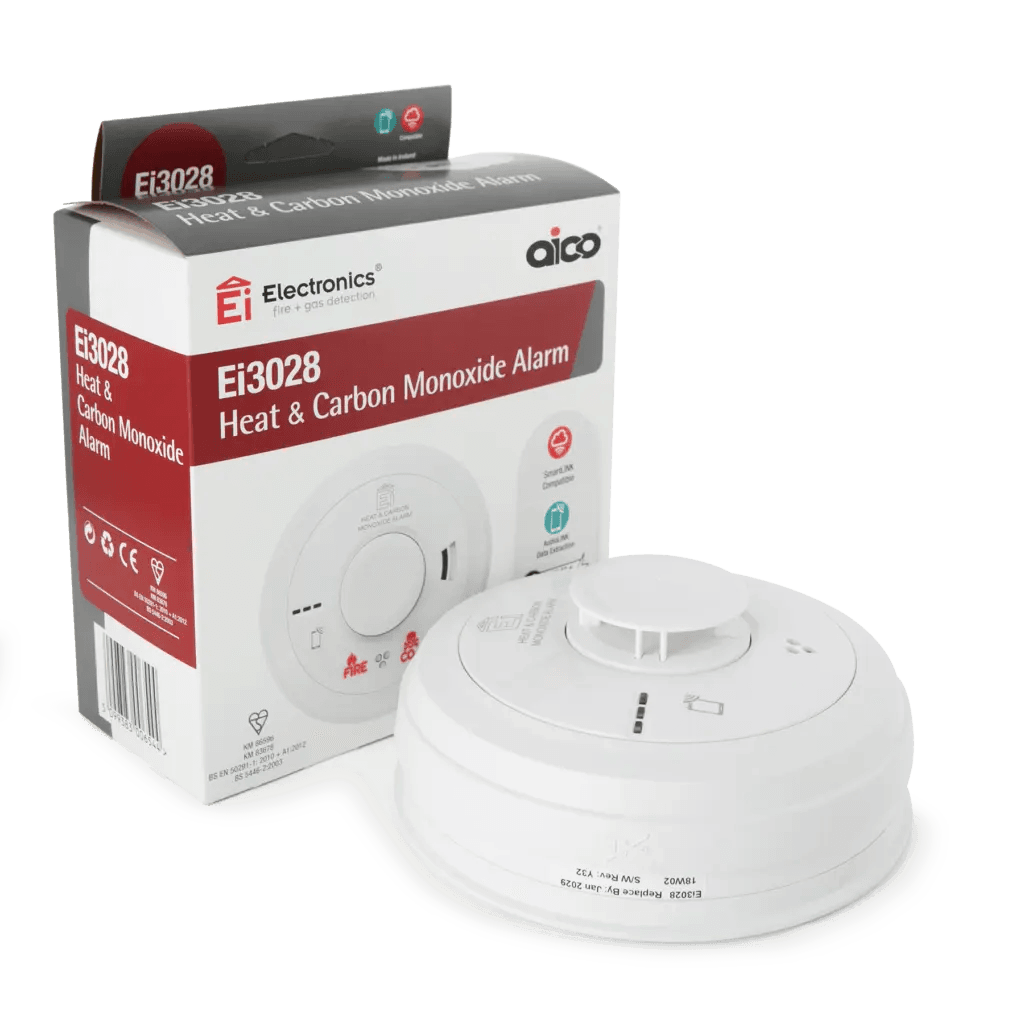
- Carbon monoxide alarms in any room with a boiler, gas fire, wood burner, or attached garage
For a typical three-bedroom house with two floors, that usually means three to four smoke/heat alarms plus at least one CO alarm — more if you have a loft conversion or basement.
If you want a clear visual guide to placement and the regulations behind it, our Fire Safety section has a wide range of compliant alarms and detectors to suit every property type.
Mains-Wired, Battery, or Wireless Interlinked — Which Should You Choose?
This is one of the most common follow-up questions, and the answer depends on your property and budget.
Mains-wired alarms are hardwired into your home's electrics, usually with a battery backup. They're the standard for new builds and major rewires, and they're required in most rental properties. Because they're interconnected via cable, if one alarm detects smoke, they all sound together.
10-year sealed battery alarms are ideal for retrofitting into existing homes where running cable isn't practical. Brands like Aico's Ei650 series use a tamper-proof lithium cell that lasts the alarm's entire working life — no more replacing batteries or dealing with 3am low-battery chirps.
Radio-frequency (RF) interlinked alarms offer the best of both worlds. They communicate wirelessly, so you get the all-sound-together benefit of mains wiring without the disruption of chasing cables through walls and ceilings. This makes them particularly popular for renovation projects and properties where retrofitting wired systems would be costly.
Alert Electrical stocks the full Aico Brand range, including their RadioLINK+ wireless interlink modules, which let you connect mains-powered and battery alarms into a single network — a popular solution for staged upgrades.
Smoke Alarm vs Heat Alarm vs CO Alarm — What's the Difference?
A surprising number of searches relate to confusion between these three devices, so it's worth clarifying:
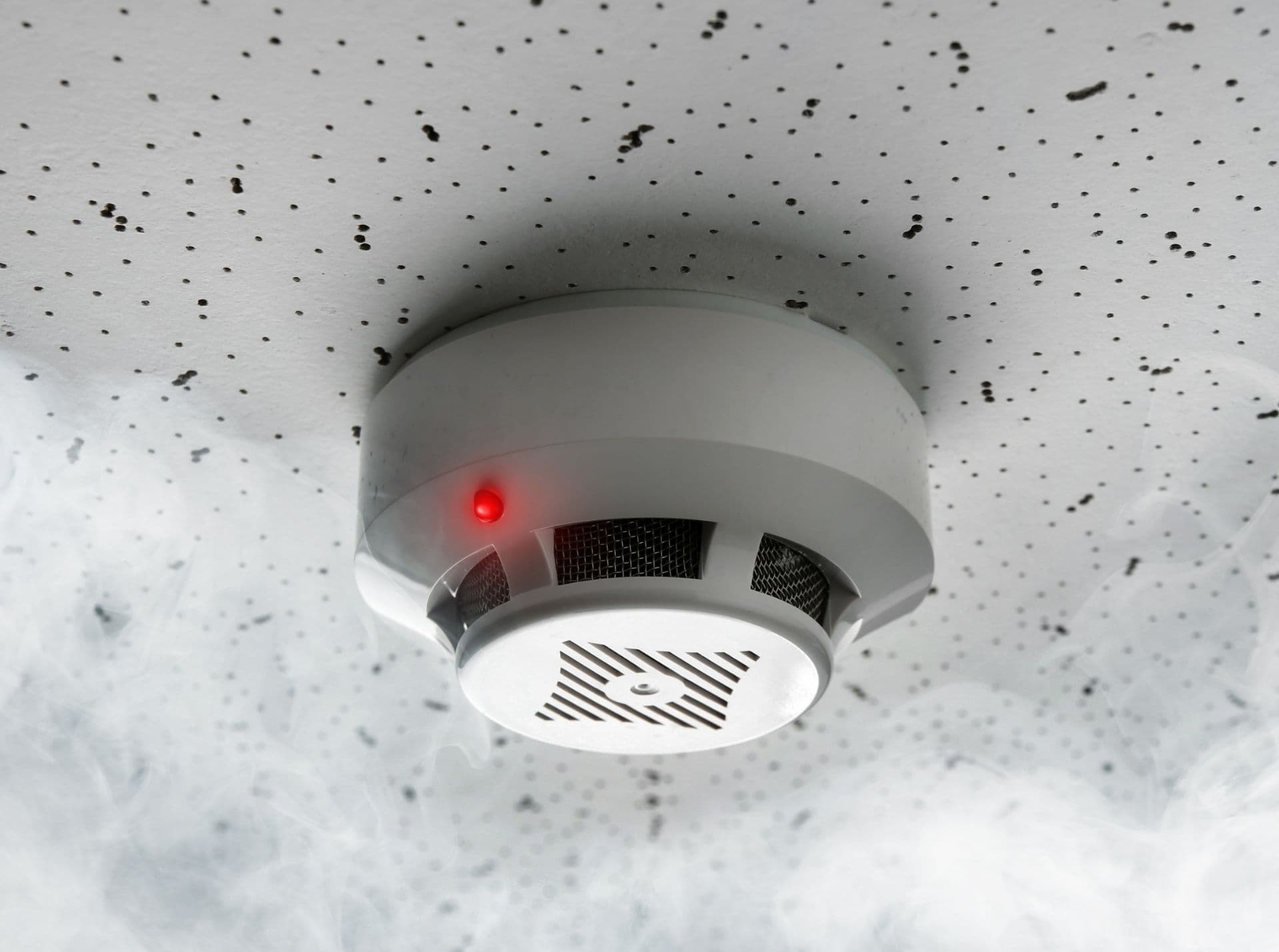
- Smoke alarms (optical/photoelectric) detect smoke particles and are best for hallways, landings, and bedrooms. Avoid fitting them in kitchens or bathrooms, where steam and cooking fumes trigger false alarms.
- Heat alarms respond to a rapid rise in temperature rather than smoke, making them the correct choice for kitchens.
- Carbon monoxide (CO) alarms detect a colourless, odourless gas produced by faulty fuel-burning appliances. CO poisoning symptoms mimic flu, which is why these alarms are a legal requirement near boilers, gas fires, and wood burners.
Many households now opt for combined smoke and CO alarm kits to cover both bases efficiently — something worth considering if you're planning a full-property upgrade.
Where Exactly Should Alarms Be Positioned?
A few practical pointers that come up again and again in homeowner searches:
- Fit ceiling-mounted alarms at least 300mm away from walls and light fittings, so airflow isn't restricted
- On staircases, position the alarm where it can detect smoke from a fire in either the kitchen or living areas below
- In bedrooms, an alarm is recommended for anyone who sleeps with the door closed, or for households with reduced mobility
- Test all alarms monthly using the test button, and replace any unit once it reaches its expiry date (usually printed on the back of the unit)
Upgrading an Older System? Here's What to Check
If your home still has alarms from a previous decade, it's worth checking:
- Age — most smoke alarms have a working life of 10 years from manufacture, after which the sensor becomes less reliable, regardless of whether the battery still works
- Interconnection — older standalone alarms won't alert you if a fire starts on a different floor; upgrading to an interlinked system closes this gap
- Compliance — Scottish homeowners in particular should check their setup against the 2022 standard, as older alarm configurations are unlikely to meet the new requirement for heat alarms in kitchens and full interlinking
For landlords managing multiple properties, our Buying Guides page can help you compare alarm types and specifications side by side before placing a larger order.
Final Thoughts
Smoke alarm regulations can feel like a moving target, but the underlying principle is simple: every level of your home needs working, interlinked detection, with the right type of alarm for each room. Whether you're a homeowner doing a routine check, a landlord ensuring compliance ahead of a new tenancy, or a contractor specifying a full system for a renovation, getting the basics right — coverage, type, and interlinking — covers the vast majority of the requirement.
Browse our full range of Fire Safety products, including trusted Aico smoke, heat and CO alarms, or contact our team if you need help specifying the right setup for your property.