Let's be honest — the British summer can be a bit of a lottery. One week you're reaching for an umbrella, and the next you're lying on top of the duvet at 2am wondering why your bedroom feels like a sauna. Sound familiar?
The good news is that portable air conditioners have become genuinely brilliant in recent years. They're more energy-efficient, quieter, and better-looking than ever before — and they don't require a penny of installation cost. Just plug in, position the exhaust hose near a window, and enjoy some well-earned cool air.
Whether you're working from home, trying to sleep comfortably, or simply want to make your living room liveable on a scorching afternoon, this guide covers everything you need to know before you buy.
How Does a Portable Air Conditioner Actually Work?
A portable air conditioner works by drawing warm air from your room, passing it over a refrigerant-cooled coil to lower the temperature, and then circulating that cooler air back into the space. The heat that's removed from the air gets expelled outside via a flexible exhaust hose — which is why you'll always need access to a window or external vent.
Most units on the market today are single-hose designs, meaning they use one duct to push hot air out. More advanced (and generally more efficient) dual-hose models use a second hose to draw fresh air in from outside, which means they don't create negative pressure inside the room. If you're cooling a larger space and want better efficiency, a dual-hose unit is worth considering.
Many portable AC units also double as dehumidifiers and fans, which is brilliant for the UK where humidity can make warm days feel even stickier than the thermometer suggests.
What Size Do You Need? Understanding BTU Ratings
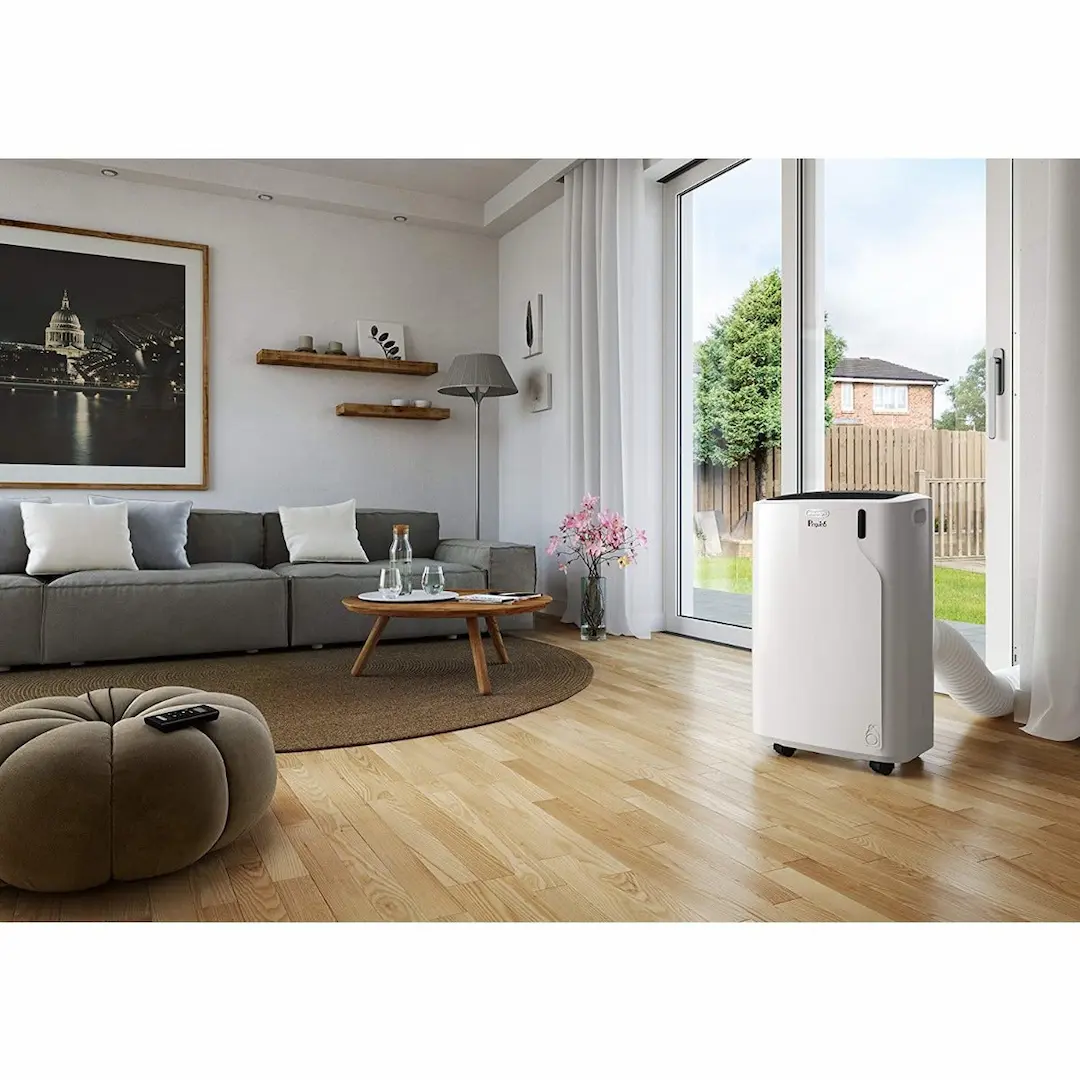
The most important spec to get right is the BTU (British Thermal Unit) rating. This tells you how much cooling power the unit has — and getting it wrong means either wasting money on an oversized unit or suffering through a heatwave with one that just can't cope.
Here's a straightforward guide to matching BTU to room size:
Up to 15 m² (e.g. a small bedroom): 5,000–7,000 BTU
15–25 m² (e.g. a standard living room or home office): 8,000–10,000 BTU
25–35 m² (e.g. an open-plan kitchen/diner): 10,000–12,000 BTU
35 m²+ (e.g. large open-plan spaces): 12,000 BTU or above
Keep in mind that if your room gets a lot of direct sunlight, or if it's on an upper floor (where heat rises), you may want to go one size up. South-facing rooms in particular can get significantly warmer than north-facing ones.
You may also see cooling capacity listed in kilowatts (kW) rather than BTU — 1 kW of cooling is roughly equivalent to 3,412 BTU. A 2.5 kW unit, for example, delivers around 8,500 BTU — suitable for a medium-sized room.
How Much Does a Portable Air Conditioner Cost to Run?
Running costs are understandably a concern, particularly with energy prices in mind. The good news is that modern portable AC units are considerably more efficient than older models, and most come with energy-saving modes and programmable timers so you're not burning electricity unnecessarily.
As a rough guide, a typical 9,000 BTU portable air conditioner uses around 800–1,000 watts per hour. Based on the Ofgem summer 2026 electricity tariff, running a unit for four hours a day over a 60-day summer would cost somewhere in the region of £50–£65 for the whole season — less than £1 a day. That's pretty reasonable for the comfort it brings.
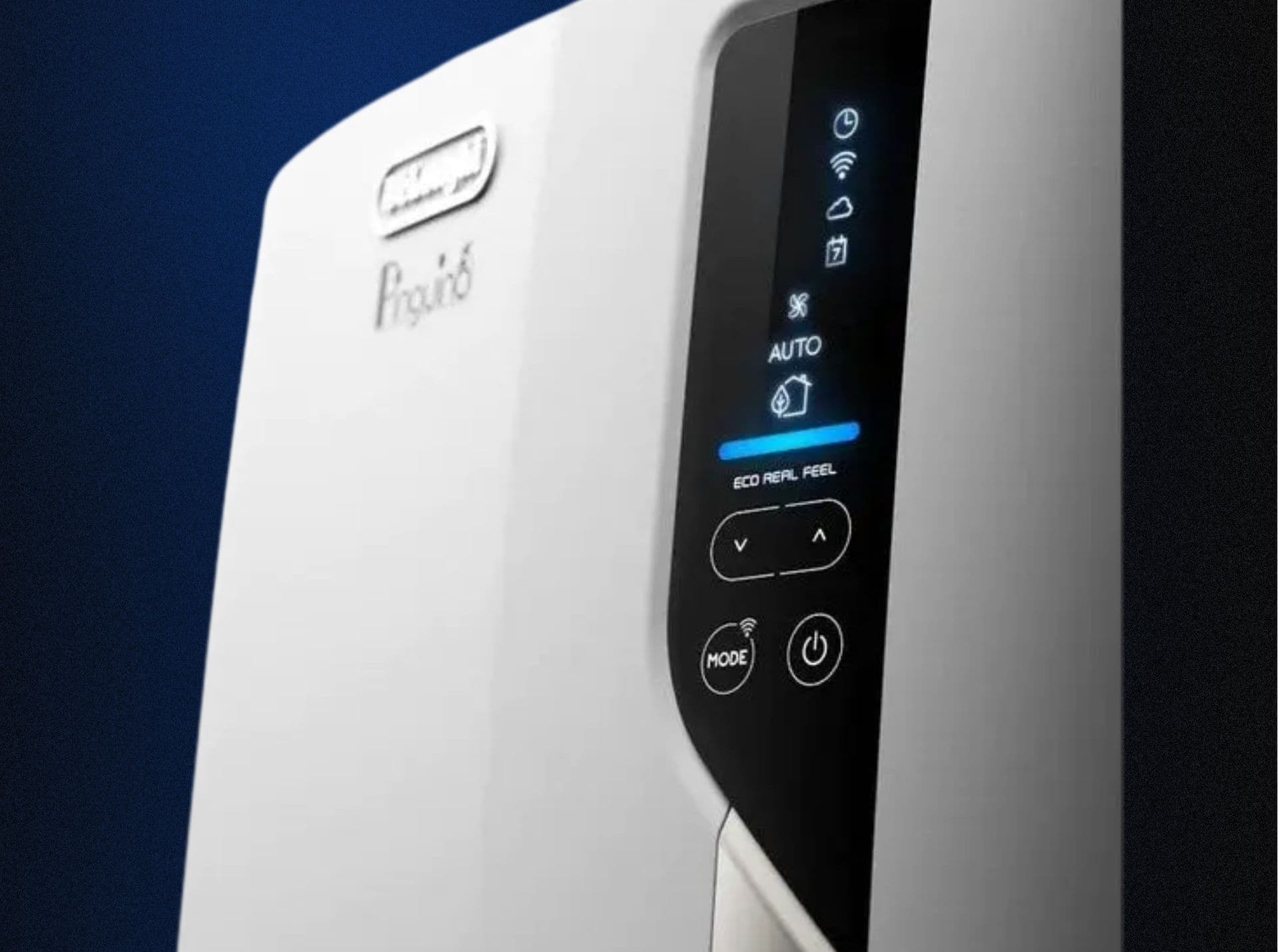
Top tip: Look for models with an A or A++ energy rating. Units with an eco mode or smart scheduling can help cut your consumption further — some Wi-Fi enabled models even let you control them from your phone, so you can cool the room down before you arrive home rather than leaving the unit running all day.
Key Features to Look For
Not all portable air conditioners are created equal. Here's what to look out for when comparing models:
Noise Level
Portable AC units have their compressor inside the unit — unlike wall-mounted split systems where the noisy bit sits outside. This means they do produce some sound. Most decent models operate at around 52–65 dB; anything under 55 dB is considered quiet enough for use in a bedroom. If you're a light sleeper, look for models with a dedicated sleep mode that runs at reduced speed and dims the display.
Self-Evaporating Technology
Older portable AC units collect the moisture they remove from the air in an internal tank that needs emptying regularly — sometimes multiple times a day in humid conditions. Modern self-evaporating (or auto-evaporation) models expel this moisture through the exhaust hose automatically, meaning far less maintenance for you. It's a feature well worth prioritising.
Smart Controls and Wi-Fi Connectivity
The latest generation of portable air conditioners can be controlled via a smartphone app, making it easy to adjust settings remotely. Some models are also compatible with Amazon Alexa or Google Assistant, so you can control the temperature with your voice. For anyone working from home or managing cooling in multiple rooms, this level of control is genuinely useful.
Refrigerant Type
Look for units that use R290 (propane) refrigerant. R290 is a natural refrigerant with a very low Global Warming Potential (GWP) compared to older HFC gases, making it a significantly more eco-friendly choice. Several leading manufacturers have now switched to R290 across their ranges, and it also tends to offer slightly better efficiency.
3-in-1 Functionality
The best portable AC units do more than just cool — they also work as standalone fans and dehumidifiers. This makes them genuinely useful year-round, not just during a British heatwave. Running a unit in dehumidifier mode during wet weather can help prevent condensation and keep your home feeling fresher.
Installation: Is It Really That Simple?
One of the biggest selling points of a portable air conditioner is that there's no installation required in the traditional sense. You don't need a qualified engineer, no holes need drilling in your wall, and there's no outdoor unit to mount.
Here's all it takes to get up and running:
1. Position the unit near a window that you can partially open
2. Attach the exhaust hose to the unit (it usually clicks or screws into place)
3. Fit the window adapter or foam seal kit to direct the hose outside — most models include one, but you can also buy universal kits separately for a better seal
4. Plug into a standard 13A socket and you're ready to go
One practical thing to consider is the hose length. Most exhaust hoses stretch to around 1.5 metres, so the unit does need to be within reach of a suitable window. If you're planning to cool a room without easy window access — such as a loft conversion — it's worth checking the hose length before you buy.
Portable Air Conditioner vs. Fixed Split System: Which Is Right for You?
If you're weighing up a portable unit against a professionally installed wall-mounted split system (often called a 'mini-split'), here's a quick comparison to help you decide:
Cost: Portable units typically range from around £200 to £700. A fixed split system starts at around £700–£800 just for the unit, plus installation costs of £500–£1,000 or more — making them a significant investment.
Flexibility: Portable units can be moved from room to room as needed. Fixed systems cool only the room they're installed in.
Efficiency: Fixed split systems are more energy-efficient and generally quieter because the compressor is located outside. If you're cooling the same room every day throughout a long, hot summer, a fixed system will likely be cheaper to run in the long term.
Installation: Portable units need no installation. Fixed systems require a qualified engineer to handle the refrigerant and mounting.
For most UK homes — where hot weather is seasonal and unpredictable — a portable air conditioner is the more practical and cost-effective choice. If you experience prolonged hot summers or want to cool a large space efficiently day after day, a fixed system may be worth the investment.
Cooling at Alert Electrical: What's Available?
At Alert Electrical, we stock a carefully selected range of portable air conditioners to suit different room sizes, budgets, and requirements. Our range includes models from De'Longhi — one of the most trusted names in portable cooling — including units from their popular Pinguino series.
The De'Longhi Pinguino range is well-regarded for its Real Feel technology, which works by combining temperature reduction and humidity control simultaneously to achieve the most comfortable conditions possible, rather than simply blasting cold air. Models in the range include Wi-Fi and Bluetooth connectivity, sleep modes, and use of the eco-friendly R290 refrigerant.
Whether you're after a compact unit for a small bedroom, or a more powerful model capable of cooling a large living space, our team is happy to help you find the right fit. You can browse the full range of portable air conditioners on our website, or pop into one of our branches in the East Midlands for hands-on advice.
Quick Summary: Portable Air Conditioner Buying Checklist
Before you buy, run through these key questions:
1. What size is the room you want to cool? (Match BTU rating accordingly)
2. Do you need it to work as a dehumidifier or fan as well?
3. How important is noise level? (Check dB rating if it's for a bedroom)
4. Does the unit have a self-evaporating function to reduce maintenance?
5. Would smart controls or Wi-Fi connectivity be useful for your lifestyle?
6. Is the exhaust hose long enough to reach your nearest window?
7. What is the energy rating, and does it have a timer or eco mode?
Ready to Stay Cool This Summer?
A portable air conditioner is one of the most practical investments you can make ahead of a British summer — especially if you work from home, struggle to sleep in the heat, or just want the peace of mind of knowing you're prepared for whatever the weather throws at you.
The technology has come on leaps and bounds in recent years. Today's units are quieter, smarter, more efficient, and more eco-friendly than ever before. And with no installation hassle, you can be up and running within minutes of unpacking.
Browse our full range of portable air conditioners at Alert Electrical, or get in touch with our friendly team if you'd like a recommendation tailored to your space and budget. We're here to help — whether you're a homeowner, a tradesperson, or somewhere in between.