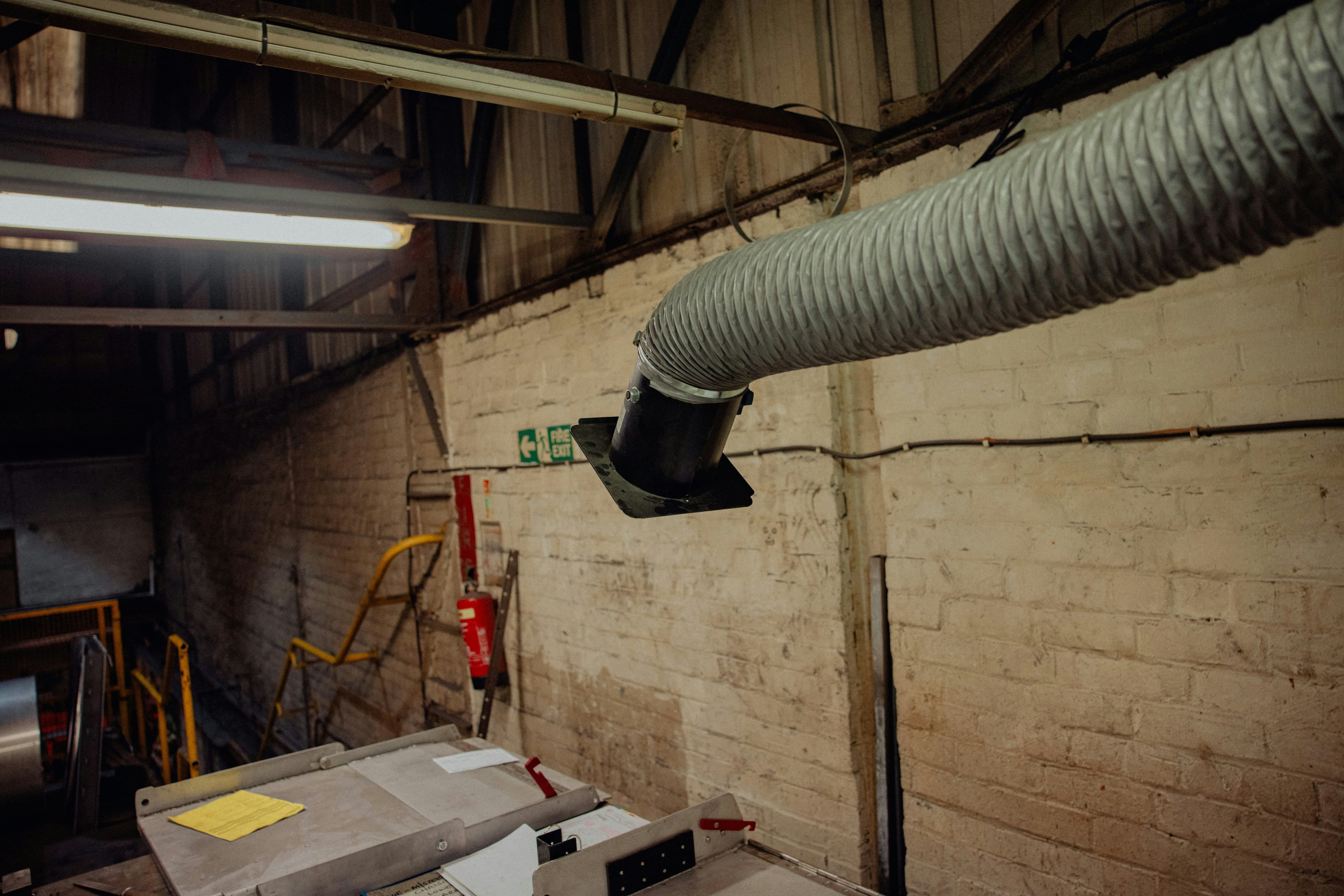
The following guide takes just a few minutes to read and covers everything you need to know when choosing an inline extractor fan and ducting.
What is an Inline Extractor Fan?
Inline fans are commonly used in bathrooms, kitchens, grow rooms, and commercial spaces to provide efficient ventilation and maintain air quality. They provide a powerful and discreet ventilation solution unlike standard wall or ceiling-mounted extractor fans, inline fans are installed within ducting. They can both push and pull air effectively, but their performance depends on placement within the ventilation system. They generally excel at pulling air over longer duct runs, which helps reduce resistance and improve overall airflow efficiency.
What is Ducting?
Ducting is the tubing or piping that channels air to and from your inline fan and acts as the pathway for airflow in your space. It comes in types such as, insulated, or non-insulated and various sizes, typically measured in diameter to match your fan. When it comes to choosing the right ducting size and material this is crucial as you want to maximize your inline fan’s performance and keep your system running quietly and efficiently.
When should you use an inline extractor fan?
Inline extractor fans are ideal for removing excess moisture, odours, and condensation, inline extractor fans help prevent mould and improve indoor air quality. This is why they are particularly beneficial for bathrooms without external walls or larger spaces requiring higher extraction rates. Many models feature humidity sensors, timers, and dual-speed options to provide enhanced control and energy efficiency.
Choosing the Right Inline Fan Type & Size
When choosing an inline fan, it's essential to match the type and size to your specific ventilation needs. Here’s a breakdown to help you:
Axial vs Centrifugal vs Mixed-flow
- Axial fans move air straight through the fan using blades similar to a propeller. They’re great for short duct runs and applications that require high airflow with low resistance (like cooling equipment or ventilating small grow tents).
- Centrifugal fans pull air into the center and force it out at a 90-degree angle, creating higher pressure. They excel in long duct runs or setups with filters and bends where resistance is higher.
- Mixed-flow fans combine the benefits of both—more pressure than axial, but quieter and more compact than centrifugal. Ideal for general-purpose ventilation where performance and noise level both matter.
Single-speed vs Variable-speed
- Single-speed fans operate at a fixed rate, making them simpler and often more affordable. Best for applications with constant airflow requirements.
- Variable-speed fans allow you to adjust airflow based on current needs—perfect for dynamic environments like grow rooms, bathrooms, or HVAC systems where conditions change.
Acoustic (Silent) vs Standard Models
- Acoustic inline fans are built with noise-reducing materials like foam insulation and rubber mounts. If your fan will run near living or working spaces, a silent model may be worth the investment.
- Standard models tend to be louder but are often cheaper and suitable for areas where noise isn't a concern (e.g., attics or garages).
Don’t Overlook Your Ducting
Choosing the right ducting is just as important as the fan itself. The length, diameter, and type of ducting all affect airflow efficiency:
- Rigid metal ducting provides the smoothest airflow and minimal resistance, ideal for long or complex runs.
- Flexible ducting is easier to install but creates more turbulence, which can reduce efficiency meaning this is best kept to shorter runs.
- Always match the duct diameter to your fan’s inlet/outlet size to avoid airflow bottlenecks.
- The more bends, filters, or long runs in your ducting, the more powerful your fan needs to be to maintain proper airflow.
When in doubt, it’s often better to oversize slightly on both fan power and duct diameter to ensure long-term performance and flexibility.
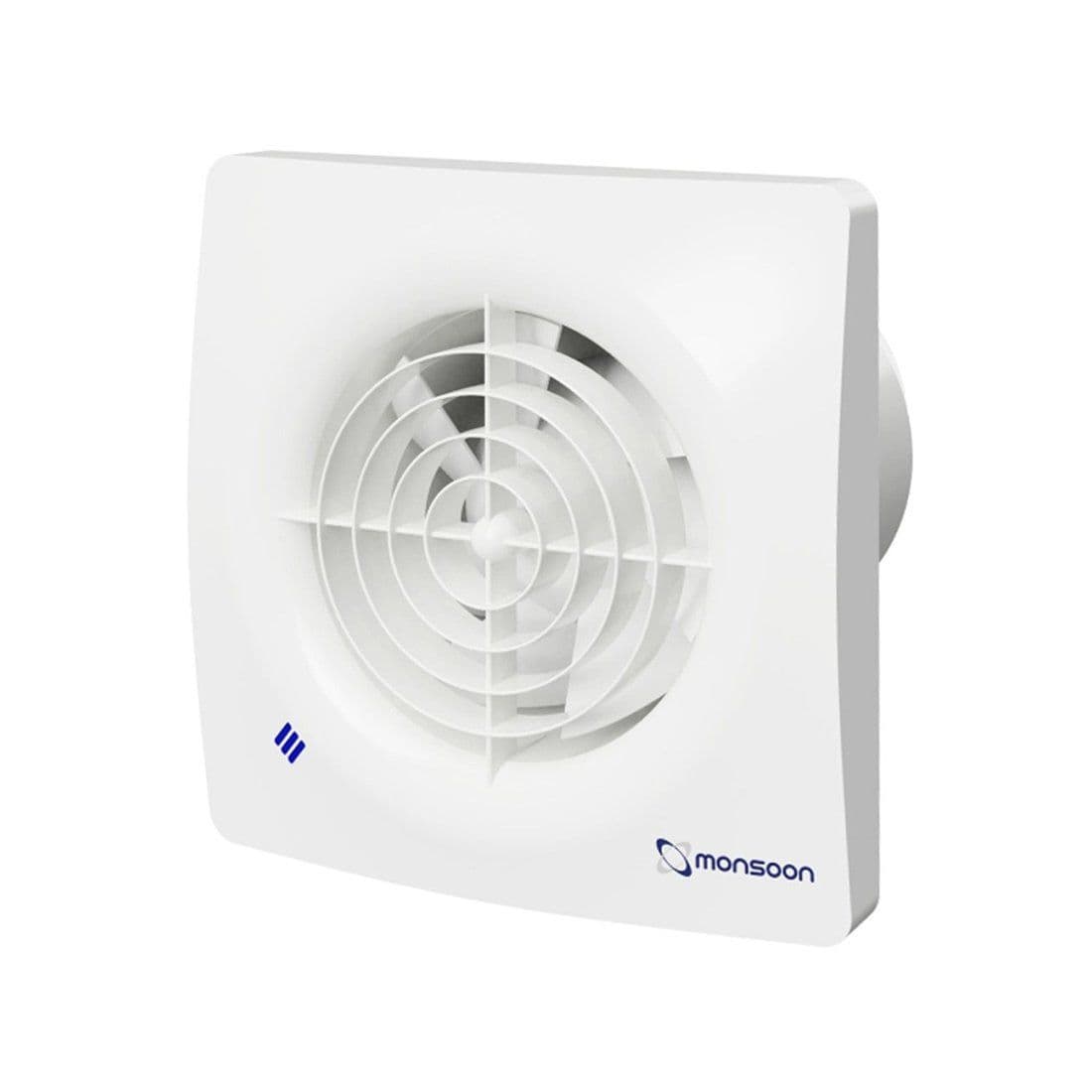
How Big of an Inline Fan Do I Need?
An inline fan’s extraction distance depends on the fan type and ducting setup. As a rule of thumb:
- Axial fans handle up to 5–10 feet of ducting before performance drops.
- Centrifugal fans can handle 25+ feet, especially with smooth ducting.
- Mixed-flow fans typically fall somewhere in between, managing moderate lengths efficiently.
Keep in mind that every bend, filter, or damper adds resistance, so plan accordingly. For long runs, a more powerful fan or booster fan may be necessary.
To learn more about measuring for a inline fan check out our guide >
Features & Extras to Consider
Modern inline fans often come with extra features that enhance performance and safety. Here are some key options to look out for when comparing models:
Built-in Timer, Humidity, or Temperature Sensors
Fans with integrated sensors can automatically adjust their speed or turn on/off based on real-time conditions:
- Timers allow you to set operating schedules, ideal for energy efficiency or maintaining consistent airflow during certain hours.
- Humidity sensors are perfect for bathrooms, grow rooms, or basements activating the fan when moisture levels rise.
- Temperature sensors help regulate heat buildup in spaces like attics, server rooms, or greenhouses, keeping the environment stable.
These features reduce the need for manual control and help extend the fan’s lifespan by minimizing unnecessary runtime.
Smart Controls / App Connectivity
Some inline fans now come with Wi-Fi or Bluetooth connectivity, allowing remote control via smartphone apps. This comes with a few benefits like being able to monitor fan speed and indoor conditions in real-time or scheduling and automation from anywhere. As well as these benefits, a lot of these types of fans can be integrated with smart home systems such as Alexa and Google Home which can help with controlling them easily. If you value convenience or already have a smart home ecosystem, this is a game-changer.
Thermal Overload Protection
Safety is critical especially for fans running continuously or in warm environments. Thermal overload protection automatically shuts the fan off if the motor overheats, preventing damage or fire risk. This is especially important for high-powered or commercial-grade models.
Removable and Washable Filters
While not standard on all models, fans with integrated filters help trap dust, lint, or odors, keeping both your space and fan internals cleaner. Choose a unit with easy-to-access, washable filters for hassle-free maintenance. These are especially useful in kitchens, workshops, and grow spaces where particles are more common.