To choose the right inline fan, you need to calculate how much air your space needs to move. This is measured in CFM (Cubic Feet per Minute). The size and layout of your ducting directly impact this calculation, so it’s important to factor that in from the start.
Here’s how to find the right size:
- Measure your room’s volume:
Multiply the length × width × height (in feet) to get the total cubic footage.
Example: A 10 ft × 8 ft × 8 ft room = 640 cubic feet.
- Multiply by the recommended air changes per hour (ACH):
- Grow rooms: 15–30 ACH
- Bathrooms or general use: 6–10 ACH
Example: 640 × 20 ACH = 12,800 cubic feet of air per hour.
- Convert to CFM:
- Divide by 60 (minutes in an hour).
12,800 ÷ 60 = about 213 CFM.
- Account for ducting resistance:
If your setup includes long duct runs, bends, carbon filters, or flexible ducting, increase the CFM requirement by 10–20% to compensate for airflow loss.
213 CFM × 1.2 = aim for a fan rated around 255 CFM.
How Far Can an Inline Fan Extract?
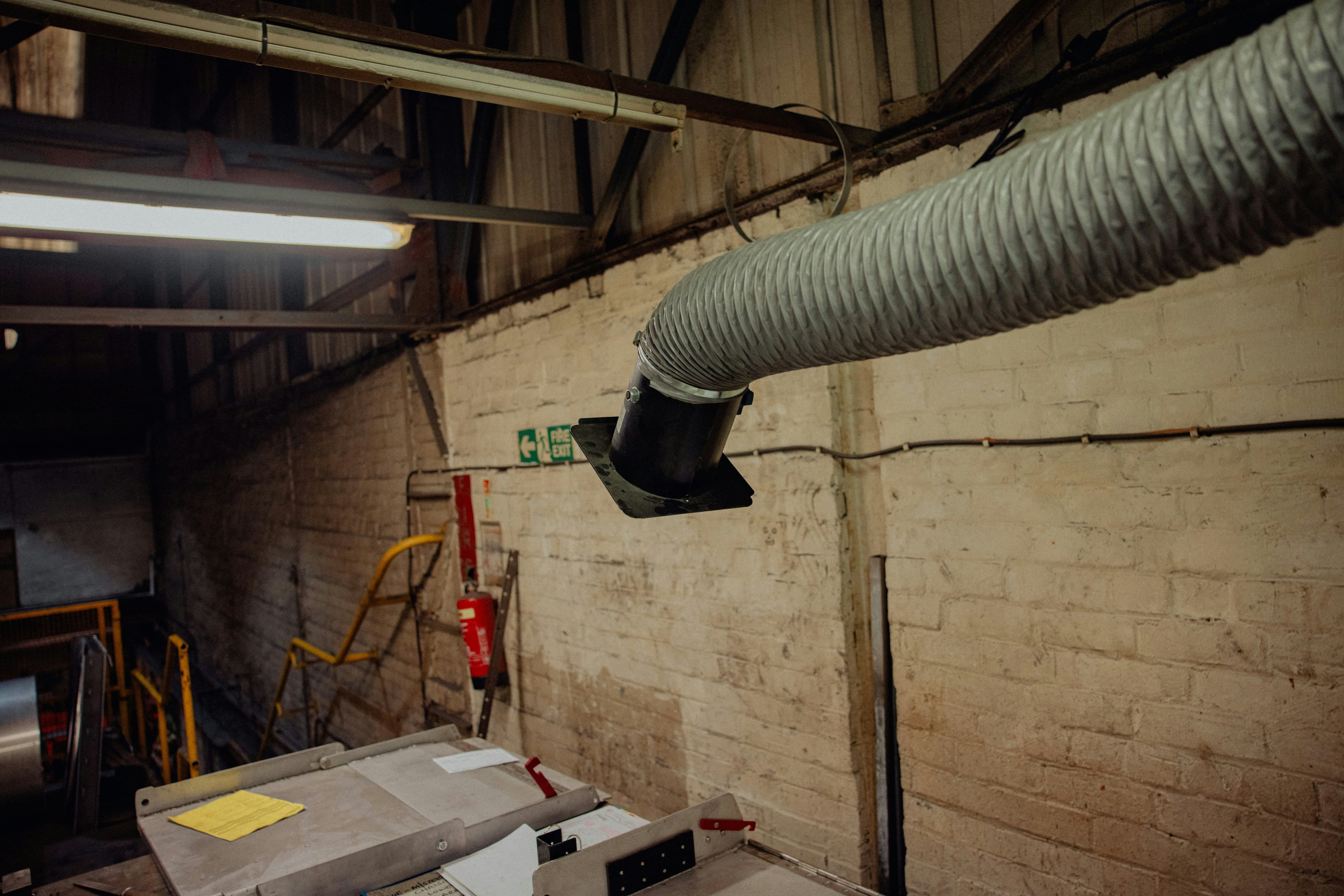
Your ducting layout plays a major role in how far your inline fan can effectively extract or move air:
- Axial fans work best with short, straight ducting—5 to 10 feet max. Beyond that, airflow drops quickly.
- Centrifugal fans are built for pressure and can push or pull air through 25+ feet, even with several bends or filters.
- Mixed-flow fans offer a good balance, handling moderate-length duct runs (10–20 feet) while staying quieter than centrifugal models.
Each element in your ducting path adds resistance—including bends, elbows, dampers, and filters. If you have multiple turns or a long run, you’ll need a more powerful fan or a second booster fan to maintain proper airflow.