Hot water is one of those bills that quietly adds up. If your immersion heater is left switched on around the clock, you could be paying to reheat water you are not even using. An immersion heater timer solves that problem automatically, and it is one of the simplest upgrades an electrician can make to a UK home.
In this guide, we look at how immersion timers work, why they matter for anyone on an off-peak electricity tariff, and how the Sangamo Powersaver range compares, so you can choose the right control for your home or your next job.
Why hot water costs more than you think
Water heating rarely gets the attention that gas central heating does, yet it still makes a meaningful dent in most household bills. The Energy Saving Trust and other UK energy bodies generally put water heating at somewhere between a tenth and a fifth of a typical household's annual energy spend, depending on the type of system and how many people live in the property.
The reason an immersion heater can be expensive to run is simple. A standard immersion element only needs to heat the water in the cylinder once. After that, it just has to top up heat lost through the cylinder walls. British Gas notes that an immersion heater typically only needs to be switched on for around an hour to provide enough hot water for a household for the rest of the day. Leave it running for the other twenty three hours, and that is pure waste.
What does an immersion heater timer actually do?
An immersion heater timer sits between the electricity supply and the immersion element, switching it on and off automatically according to a schedule you set. Instead of relying on someone remembering to flick a switch, the timer does it for you every day.
Most timers on the market today fall into one of three types:
Boost timers: a simple push button that turns the immersion on for a fixed period, usually one or two hours, then switches off automatically. Ideal for topping up hot water outside the normal schedule.
Daily or weekly programmers: these let you set specific on and off times for each day, so the immersion only runs when the household actually needs hot water.
Combined controllers: these merge daily, weekly and boost functions into one unit, giving more flexibility without needing several separate devices.
Meet the Sangamo Powersaver range
Sangamo has been manufacturing time clocks, thermostats and immersion controllers since 1951, and its Powersaver range is one of the most widely specified immersion control lines in the UK.
A few examples give a sense of what is available:
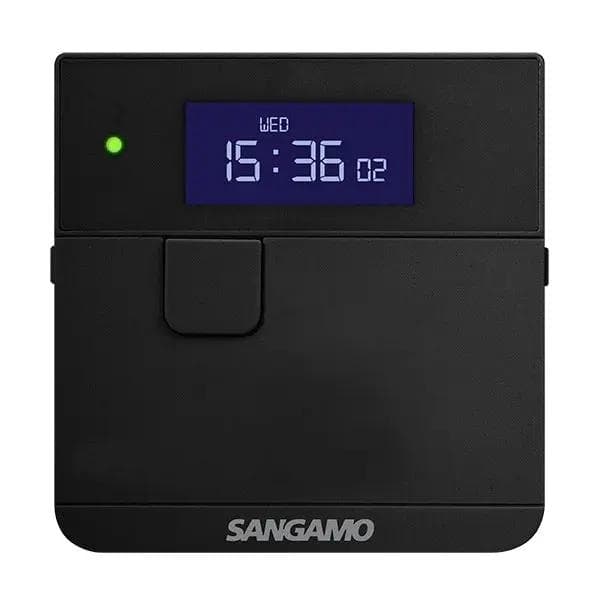
Sangamo Powersaver Electronic Boost Timer (PSB2): a straightforward boost switch that is not limited to immersion heaters. It can also control panel heaters, security lighting or combi boiler circuits.
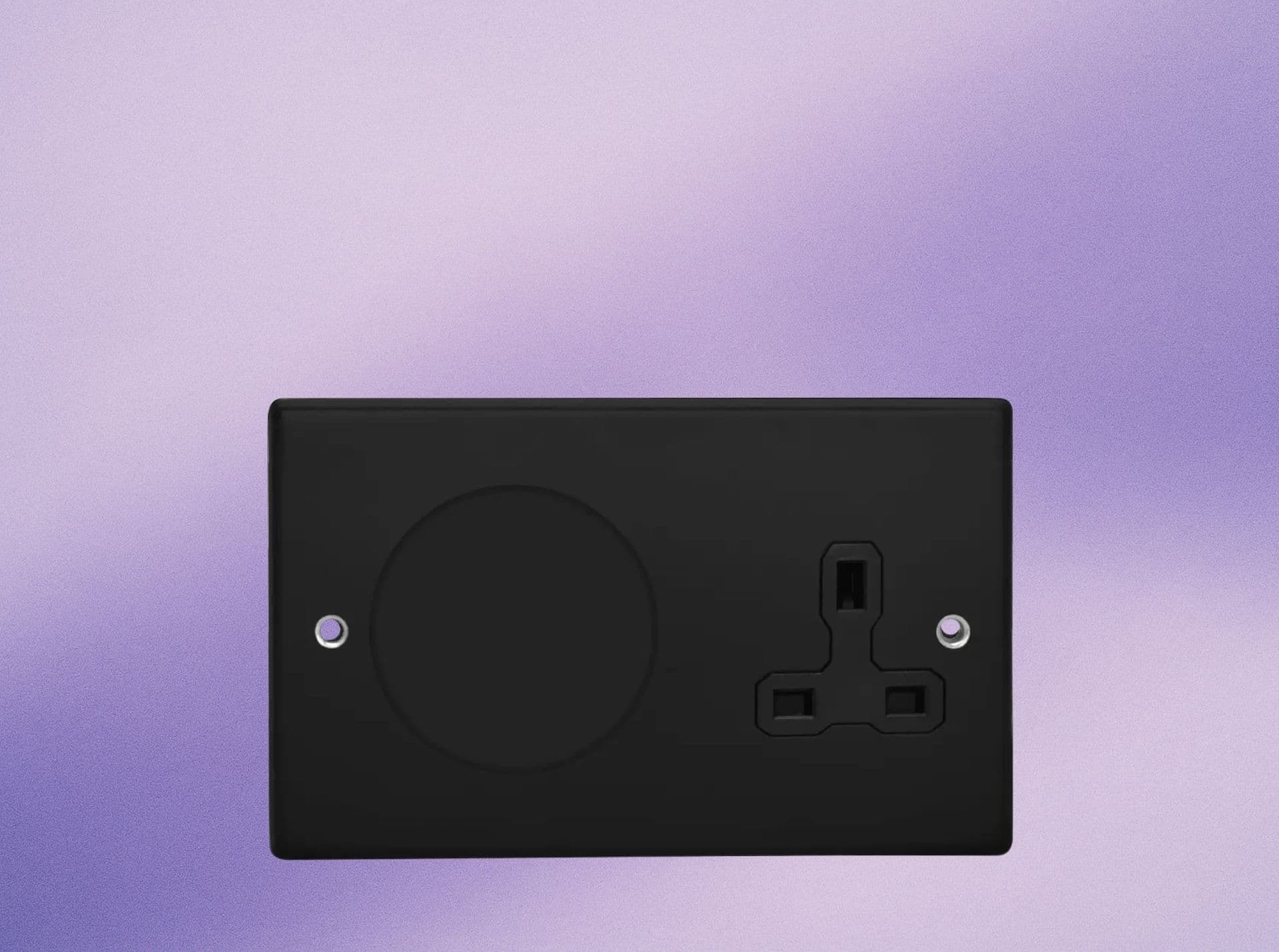
Sangamo Powersaver+ 2 Hour Electronic Boost Timer: available in versions with an integrated fused spur, so the timer and the isolation point are combined in one wall mounted unit. Suitable for immersion heaters, towel rails and outdoor lighting circuits, and available in black, white or silver to suit different finishes.
Sangamo Powersaver+ 7 Day Fused Spur Time Switch with Boost (PSPSF247B): adds full seven day scheduling on top of the boost function, useful where hot water demand varies across the week, for example a household that is out all day on weekdays.
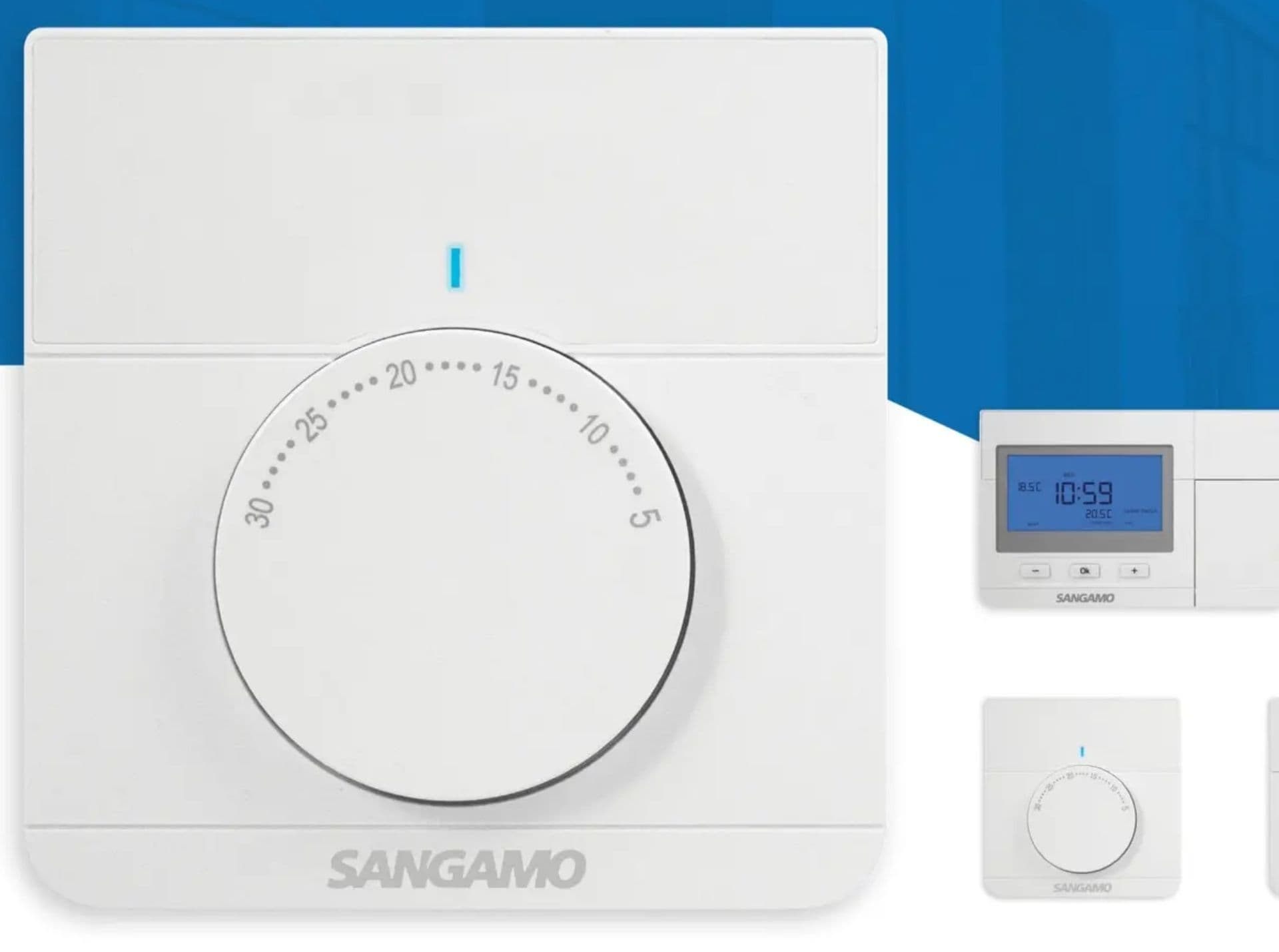
Sangamo Powersaver Select Immersion Controller (PSS2): combines daily, five/two day and full seven day programming in a single unit, previously only available as three separate models.
The full range, including colour options and fused spur variants, can be browsed on the Timeswitches and Immersion Heater Timers category page.
Immersion timers and off-peak electricity tariffs
Immersion timers become even more useful once you factor in off-peak electricity. Tariffs such as Economy 7 offer several hours of cheaper overnight electricity in exchange for a higher daytime rate, and many UK homes, particularly those without gas central heating, still rely on this structure to heat water overnight when demand, and the price, is lower.
Brands such as Horstmann make controls specifically designed around Economy 7 and similar cheap-rate tariffs, and the same principle applies to any programmable Sangamo Powersaver unit: by scheduling the immersion to run during the cheaper overnight window, and adding a short daytime boost only when needed, you can heat water at the lowest available rate rather than the standard one.
With more suppliers now offering time of use and smart tariffs, having a programmable immersion timer rather than a simple on/off switch puts you in a better position to take advantage of whatever off-peak window your tariff offers, now or in the future.
Choosing the right timer for your home
A few practical questions help narrow down the options:
Is the household routine fairly consistent? A simple boost timer or single daily programme may be enough.
Does hot water demand vary through the week? Look at a seven day or 5/2 day programmer, such as the Powersaver Select or the 7 Day Fused Spur model.
Is the household on an off-peak tariff? Prioritise a programmable timer that can be set to the cheap-rate hours, with boost available for top-ups.
What finish does the installation need? Several Powersaver+ models are available in black, white or silver, and with or without an integrated fused spur, which is useful when matching existing wiring accessories.
Installation and safety
Immersion heater timers, particularly fused spur models, connect directly into the fixed wiring of the property rather than plugging into a standard socket. As with any fixed wiring work, installation should always be carried out by a qualified electrician, in line with the UK wiring regulations, BS 7671. Getting the circuit rating, isolation and earthing right matters for both safety and warranty.
If you already have an older mechanical time switch and are simply upgrading to a newer electronic Powersaver unit on a like-for-like basis, your electrician will be able to advise whether the job is straightforward or whether any additional work is needed, for example where an existing cylinder thermostat or immersion element also needs attention.
Frequently asked questions
Do I need a timer if I already have a cylinder thermostat?
Yes. A cylinder thermostat controls the temperature of the water, switching the immersion off once the set temperature is reached. A timer controls when the immersion is allowed to run at all. Used together, they stop the immersion heating water it does not need to heat, and stop it running outside the hours you actually want.
Can a boost timer be used on its own, without a programmer?
Yes, a boost only timer such as the Sangamo Powersaver PSB2 is a good option where hot water is needed occasionally rather than on a fixed daily schedule, for example in a holiday let or an outbuilding.
Will an immersion timer work with a combi boiler?
Some Powersaver models, including the PSB2, can be used to control combi boiler circuits as well as immersion heaters, though the exact wiring will depend on the boiler and the installation. An electrician can confirm compatibility before fitting.
Final word
An immersion heater timer is a small, inexpensive product with a genuinely useful job: making sure you only pay to heat water when you actually need it.
Whether you are after a basic boost switch or a full seven day programmer built around an off-peak tariff, the Sangamo Powersaver range at Alert Electrical covers most UK homes and installation types.
If you are not sure which model suits a particular job, our team is happy to help you choose before you order.