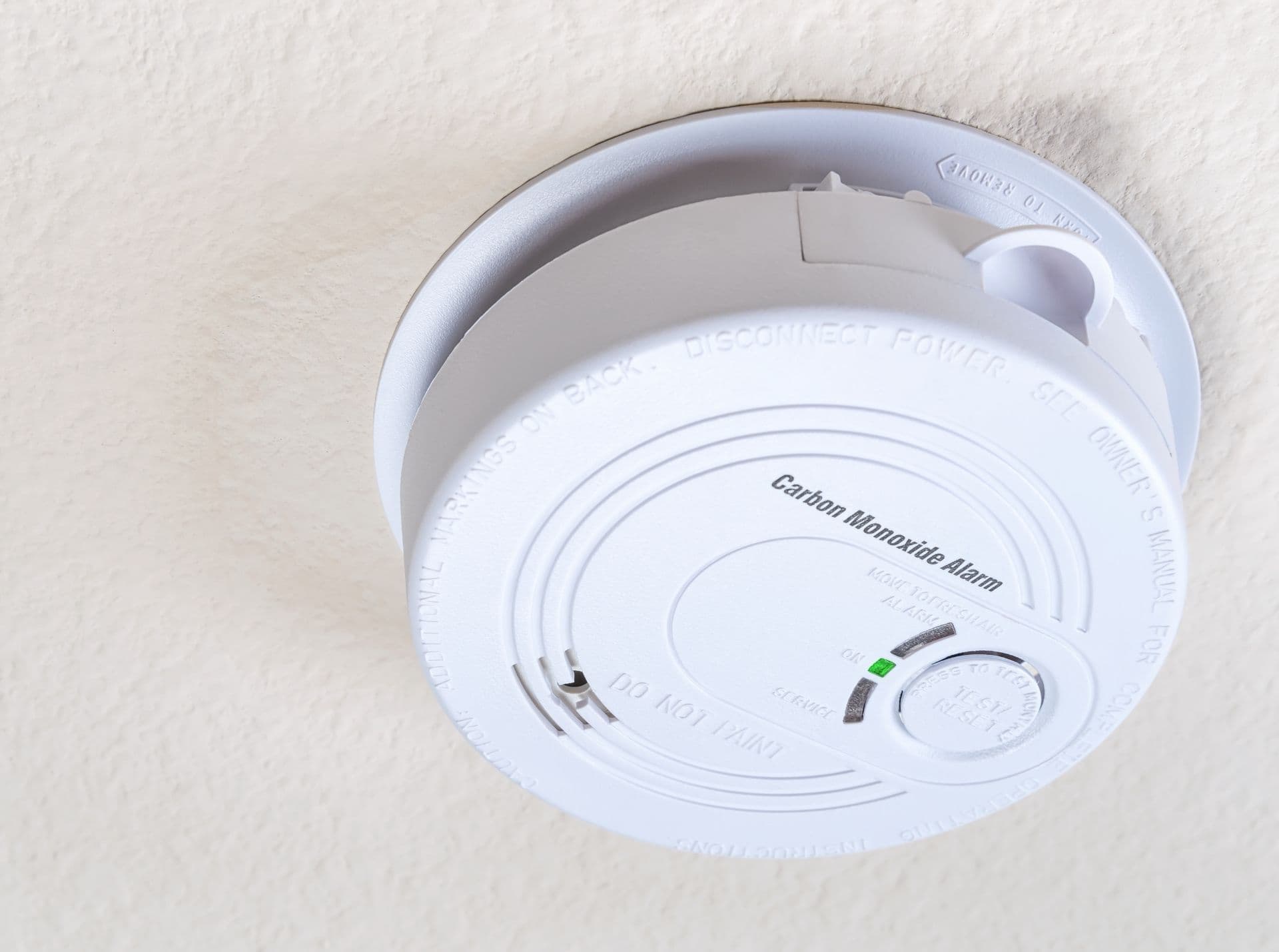
As the evenings draw in and boilers, wood burners and gas fires start working again after months of standing idle, carbon monoxide risk rises with them. A quick check now, before the heating season properly gets going, is one of the simplest ways to keep a home safe.
This guide covers what carbon monoxide alarms actually do, what UK regulations require, how to check the alarm you've already got, and how to choose a new one if it's time for a replacement.
Why Carbon Monoxide Risk Increases in Autumn
Carbon monoxide is produced whenever fuel doesn't burn completely. That includes gas boilers, gas fires, wood burners, log burners, oil heaters and any other fixed combustion appliance. Over summer, many of these sit unused. When they're switched back on for the colder months, any fault that's developed while dormant, such as a blocked flue, a cracked heat exchanger or poor ventilation, can go unnoticed until the appliance is running again.
Carbon monoxide has no smell, colour or taste, so a working alarm is genuinely the only reliable way to know it's building up. Symptoms of exposure, such as headaches, dizziness and nausea, are easy to mistake for a cold or general tiredness, which is part of what makes it so dangerous.
What UK Regulations Actually Require
Requirements vary slightly across the UK, but the core position in England is well established. Since 2022, private and social landlords must fit a carbon monoxide alarm in any room used as living accommodation that contains a fixed combustion appliance, excluding gas cookers. This extended earlier rules that only applied to solid fuel appliances such as wood burners. Landlords who don't comply can face a civil penalty of up to £5,000, and alarms must be checked and working at the start of every tenancy.
For owner-occupied homes, Building Regulations Approved Document J requires a carbon monoxide alarm whenever a new or replacement fixed combustion appliance, again excluding gas cookers, is installed.
Scotland and Wales have their own frameworks, and Wales notably includes gas cookers within its requirements, so it's worth checking the specific rules that apply if you're working across borders. Whatever the exact legal position, any UK alarm should carry the BS EN 50291 kitemark, which confirms it's been tested to the recognised safety standard.
How to Check the Alarm You Already Have
Before assuming a new alarm is needed, a few quick checks will tell you where you stand:
Find the manufacture date. It's usually printed on the back or base of the unit. Most carbon monoxide alarms have a working life of around five to ten years, after which the sensor becomes less reliable even if the alarm still appears to function.
Press the test button. This confirms the sounder works, though it doesn't test the sensor itself.
Check for an end-of-life warning. Many modern alarms, including Aico's range, give a distinct beep pattern or indicator light once they've reached the end of their sensor life.
Look at the room it's fitted in. If a new appliance, such as a replacement boiler or a newly installed wood burner, has gone in since the alarm was last checked, it's worth confirming the alarm is still correctly positioned for that appliance.
If any of these checks raise doubts, replacing the alarm is the safer option. Sensors degrade gradually, so an alarm that seems to be working can still be underperforming.
Choosing the Right Carbon Monoxide Alarm
For anyone buying new or replacing an existing unit, Aico is one of the most established names in UK fire and CO detection, widely specified by housing associations and installers because of its reliable sensors and long service life.
A few options worth knowing about:
The Aico Ei208WRF is a battery powered CO alarm with RadioLINK+ wireless interconnection, useful where mains wiring isn't practical.
The Aico Ei3018 uses an individually calibrated electrochemical sensor and forms part of Aico's mains powered 3000 Series.
The Aico Ei3030 combines fire and CO detection in one unit, which suits rooms where both risks need covering without fitting two separate alarms.
If you're weighing up alarm types more generally, our earlier guide on choosing between smoke alarm types covers the same ground for fire detection, and pairs well with the CO guidance here.
Where to Position a Carbon Monoxide Alarm
Positioning affects how quickly an alarm responds. As a general rule, fit the alarm in the same room as the combustion appliance, roughly one to three metres away from it rather than directly above or right beside it. Avoid corners, and keep the alarm clear of windows, doors and extractor fans, since draughts can disperse carbon monoxide before it reaches the sensor.
If you're unsure about the right spot for a particular appliance, the manufacturer's fitting instructions will give exact guidance for that model.
Quick Answers
Do I need a carbon monoxide alarm if I don't have gas?
Yes, if you have any fixed combustion appliance, including wood burners, oil heaters or biomass boilers. Only appliances used purely for cooking are generally excluded.
How often should a carbon monoxide alarm be replaced?
Most alarms have a five to ten year working life, stated on the unit itself. Check the manufacture date and replace it once it's reached the end of that period, even if it still seems to work.
Can I fit a carbon monoxide alarm myself?
Battery powered alarms are generally straightforward to fit. Mains wired alarms should be installed or connected by a qualified electrician.
Is a smoke alarm the same as a carbon monoxide alarm?
No. They detect different hazards using different sensors. Some combined units, such as the Aico Ei3030, cover both, but a standard smoke alarm won't detect carbon monoxide.
Browse our full fire safety range or head over to our heating category if you're also getting appliances ready for the colder months ahead.