If you've ever sat in one warm room while radiators clank away unused in three empty ones, you've already felt the problem with whole-house central heating: it heats space, not people. Zone heating flips that logic. Instead of warming every room to the same temperature regardless of whether anyone's in it, you heat the rooms you're actually using, when you're using them, with electric heating that responds in minutes rather than hours.
It's not a new idea, but rising energy costs and smarter, more efficient electric heaters have made it a genuinely practical one for UK homes.
What is zone heating, and why are more homes switching to it?
Zone heating simply means treating each room as its own heating zone, rather than relying on one central system to warm the whole property at once. A home office gets warmed while you're working in it. A guest bedroom stays cool until someone's actually staying in it. A conservatory, notoriously hard to heat efficiently with a central system, gets its own dedicated solution instead of dragging down the performance of the whole house.
Electric heating suits this approach particularly well, because individual units switch on and reach temperature quickly, and switch off just as fast when a room's empty. Compare that to a central heating system, where warming one room usually means committing to warming several others along the way.
The real cost difference: one room vs the whole house
This is the part most people get wrong. It's tempting to assume that any electric heater running for hours must cost more than gas central heating, but that comparison only holds if you're heating the same amount of space. Run a 1500W electric panel heater in a single home office for three hours, and you're using a fraction of the energy it takes to fire up a boiler and warm radiators across an entire house for the same period, most of which goes to rooms nobody's sitting in.
That's the real saving in zone heating: not that electric heating is inherently cheaper per unit of energy, but that you stop paying to heat space you're not using. If you're on an Economy 7 tariff, the case gets stronger still, since off-peak electric heating (such as storage heaters, or simply running heaters during cheaper overnight or early morning rate periods) can bring running costs down further.
Choosing the right electric heater for each room
Not every room needs the same type of heater, and this is where a lot of people either overspend or underheat.
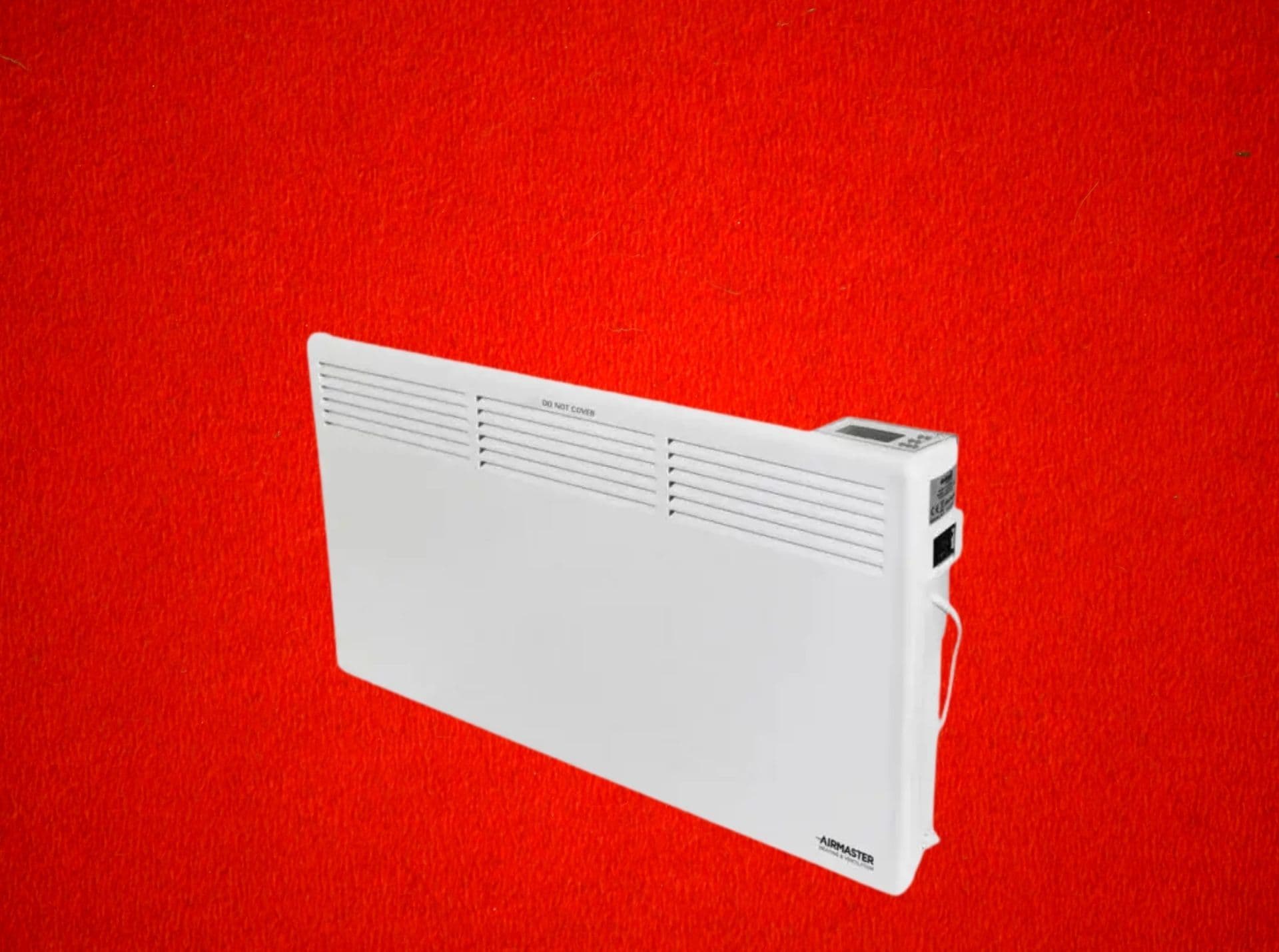
For a room you're only in occasionally, a home office, a spare room, a utility space, an electric panel heater is usually the better fit. They're slimline, wall-mounted, and warm up fast, which suits rooms where you want heat on demand rather than around the clock. Brands like AirMaster and ATC offer panel heaters with digital thermostats and timers, so the room's ready by the time you walk in, and switches off the moment you leave.
For a room that needs to feel consistently warm, a living room, a main bedroom, somewhere you'll spend hours at a time, a full electric radiator tends to perform better. These hold their heat more evenly and are built to act as a primary heat source rather than a quick top-up, with manufacturers such as Creda and Dimplex offering models designed for exactly that kind of steady, all-day use.
And if wall space or room layout is tight, it's worth browsing wall-mounted electric radiators specifically, since a slimmer, fixed unit can free up floor space that a freestanding option would eat into.
Smart controls make zone heating genuinely effortless
The other piece that's made zone heating so much more practical in recent years is smart control. A growing number of electric heaters, including WiFi enabled models from ATC and Dimplex, let you schedule and adjust each room individually from your phone. That means you can set your home office to warm up ten minutes before you sit down to work, or check that you didn't leave the spare room heater running after a weekend guest's left, all without needing a whole-home smart heating system installed.
Paired with a thermostat, this is really what separates efficient zone heating from simply scattering a few heaters around the house. Precise, room-by-room control is where the actual savings come from.
Getting started with zone heating in your home
You don't need to convert your whole house at once. Most people start with the one or two rooms where the mismatch is most obvious, an unused spare room on the central system, or a home office that's cold for the first half hour of every working day, and build from there.
If you're weighing up which type of electric heater suits which room, our full electric heaters range is a good place to start, with options across every output and budget. And if you're not sure where to begin, our team's always happy to talk through what would work best for your home.
FAQs
Is zone heating actually cheaper than central heating?
It can be, particularly in homes where several rooms go largely unused for most of the day. The saving comes from heating less space overall, not from electric heating being inherently cheaper per unit than gas.
Can I mix zone heating with my existing central heating system?
Yes. Many households use electric heaters to top up specific rooms, like a home office or conservatory, while keeping central heating running for the rest of the house, rather than replacing the system entirely.